The Rollercoaster and the Process
What a rollercoaster this gift of life is. I’ll never forget working in my mid-twenties for a national income protection and life insurance company. One of the sales managers would often reference my time there as “quite a roller coaster ride.” He always said it with a smile and a humble Midwestern charm of sincerity for the ups and downs of my experience.
In four years, I navigated a complete company overhaul—new roles, teams, service models, and managers transformed decades of established business practices. Within that chaos, I changed positions four times: laid off shortly after being hired due to the restructuring, then rehired and promoted twice.
I started as a Service Associate supporting National Account Managers, got licensed to sell disability and life insurance as a Benefit Counselor, transitioned to Account Specialist servicing small to medium-sized employers, and finished as a Marketing Consultant supporting Client Managers and Sales Rep teams. Employer-funded benefits turned out to be one of the most fun jobs I never knew I’d enjoy.
From mattress factories to D.C. law firms, large local universities to small locally owned businesses to national and local nonprofits—the range and scale taught me not only about the roles people play, but the structures that support them in doing it. The generous training and my experiences with our final regional manager made this experiential understanding of how businesses operate and scale an incredibly enriching part of my professional foundation.
There are so many systems, processes, structures, and foundations, and so many people—no matter your scale, class, employer, or industry—at the end of the day, there are good decent people working long hours to provide for their families.
As a theater major, I often sat in my cubicle and remembered railing against big insurance companies on behalf of the small guys—people who went destitute and never got back the peace of mind they thought they’d purchased, only to discover a loophole in the claims process that made years of premiums worthless and left bills unpaid.
If I’m honest, I left the insurance world because I never could shake this truth. It’s not industry-wide, but there are young sales reps who sell policies without fully understanding what they’re selling. I’m sure the same is true for young benefits counselors enrolling people in coverage. Mistakes are inevitable, and no matter the initial cause, the resulting damage can take a long time to discover.

One of the gifts of this journey are the people we meet as we develop the tools and insights necessary for successfully building a business. I have a huge debt of thanks to a local consultant who suggested I engage E-Myth Revisited, which I’ve read from our shelf for the first time and listened to specific segments repeatedly. The foundational work laid out in this book has helped me understand that everything we’re experiencing—the shifts—they’re part of the process.
As Michael Gerber writes in E-Myth Revisited, “For the master, there is only one way and that is to teach another… the master knows that the process of growing, of change, of transformation, is always moving, never still.” (131).
The fun part of employer-funded benefits was understanding the world of employers, not only here in the United States, but across the globe. From working with HR directors to small business owners trying to ensure they can attract the best for their business, I unexpectedly fell into a deep dive into understanding the economy and making sense of listening to Bloomberg radio. My time working in the insurance industry was more educationally and foundationally enriching than probably most MBAs I could have received. I do not deny or claim to have the same knowledge as someone with an MBA; as someone with a MACS, I believe in credit for the knowledge you’ve obtained. I also know that these letters often don’t mean a thing if the result is an individual that I would not want on my team to collaborate, innovate, and be creative with—in business or in art.



I think the world is challenging us to a broader notion of success and rank, experience and knowledge. I fear we’re in a place where there is a battle between those who know and those who do not know. The in-the-know and the not-in-the-know. The ignorant and the informed, the conscious person and the comatose person. I’m here for every person—can we please just give each other space to be? Please stop with all the labeling and need to place each other.
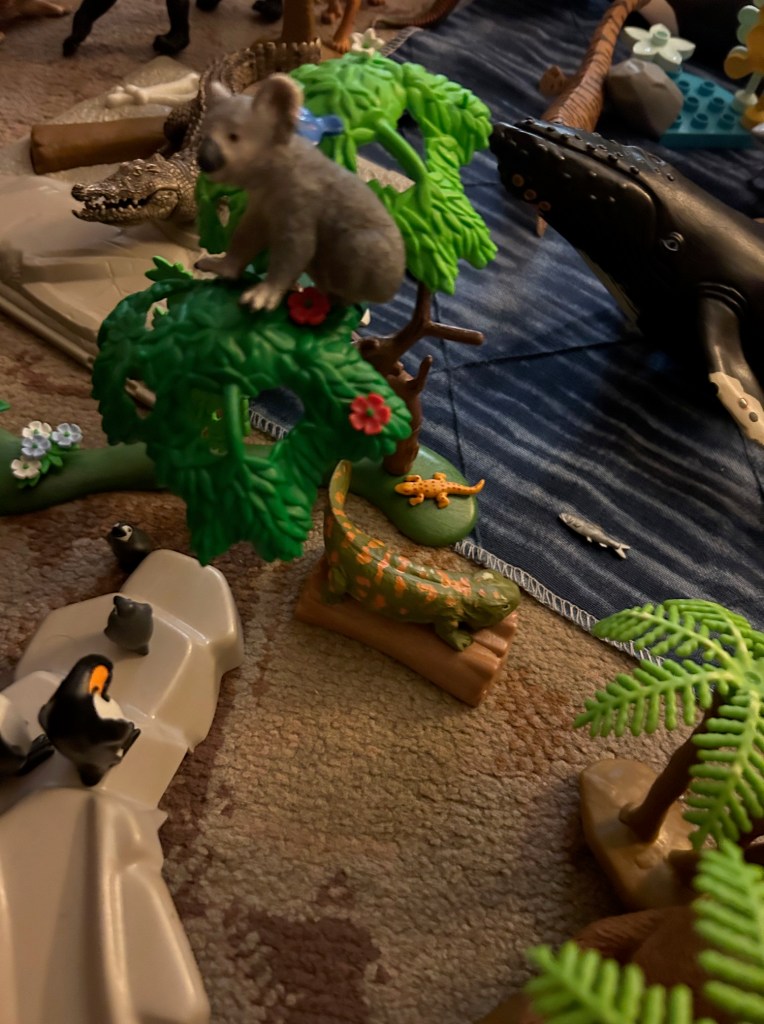
I like dogs and I like cats. I love otters. We make a lot of zoos in my household. In our zoo, we do our best to accommodate the geographic experiences that each animal naturally inhabits. We also often have a jungle that turns into an arctic forest pretty quickly. Space is limited. Resources are limited. They’re limited on the globe and in our house. We all run into our own limits all the time, and as we’re navigating our limits, we’re also running into others navigating their own.
Like a zoo, like any business or organization, network or streaming service, resources are best directed towards that which generates the best for whatever the whole system is in play. The processes we put in place help to establish and ensure the wellbeing of the larger system. At Frank & Ethel’s, we’re figuring out the timing and navigating the realities of no longer being just the “Technician,” as Michael Gerber lovingly refers to those like us in the infancy stage of running a small business, learning to step away from only doing the work to navigating “working on the business” that allows the work to be possible.
Thank you for following, for participating, for engaging with our material- thank you for your time. We’re excited about what’s to come and can’t wait to keep you informed as we keep moving along on our journey to discover space for us all to enjoy being our perfectly imperfect selves. I’ll close with a final quote from Michael Gerber. If you can, I recommend both the book and the audio. If you hear his voice, re-reading the book will feel like a comfortable hug from a man who most certainly raised daughters.
“The world’s not the problem, you and I are.
The world’s not in chaos, we are.
The world’s apparent chaos is only a reflection of our own inner turmoil.
If the world reflects a lack of good sense, it’s because each one of us reflects the same. If the world acts as if it doesn’t know what it’s doing, it’s because each one of us acts the same. If the world is violent, and greedy, and heartless, and inhuman, and often just plain stupid, it is because you and I are that way.
So if the world is going to change, we must first change our lives!
Unfortunately, we haven’t been taught to think that way. We are an ‘out there’ society, accustomed to thinking in terms of them against us. We want to fix ‘out there’ society; coming ‘inside’ is a problem.
But now is the time to learn how. Now is the time to change.
Because unless we do, the chaos will remain.
And we can’t afford this kind of chaos much longer.
We’re simply running out of time.” (261)
Here’s to us finding a safe space for all of us to figure out our “inside” so we can better share “out there” together.
— Michael E. Gerber, The E-Myth Revisited: Why Most Small Businesses Don’t Work and What to Do About It (Harper Collins, 1995), 131 and 261.

Leave a comment